NOVUS Award Winner to Present at ADSA
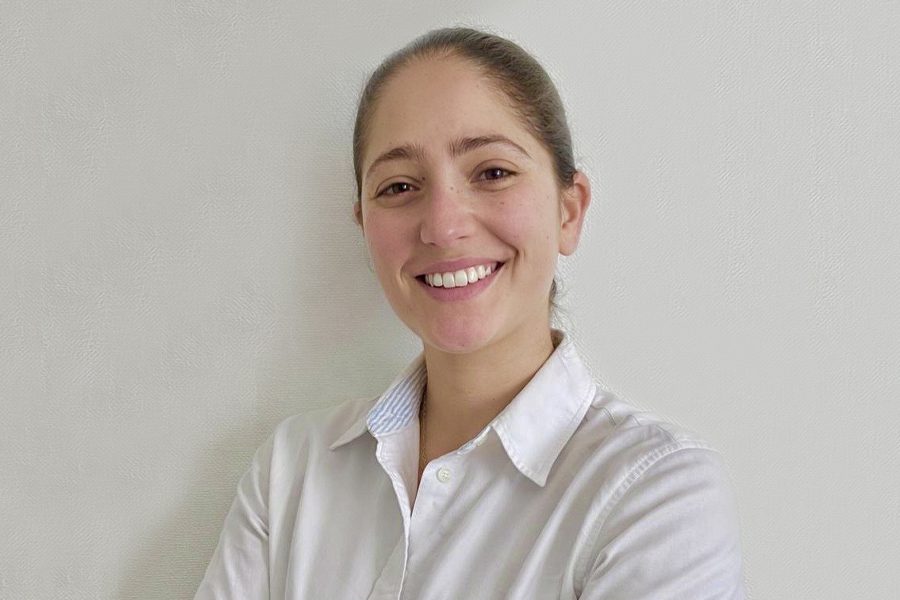
BRUSSELS, BELGIUM (April 30, 2026) – The winner of the 2025 NOVUS Award, doctorate candidate Rebecca El Hawat, will present research on rumen activity during the transition period at the American Dairy Science Association (ADSA) meeting in June.
The NOVUS Award recognizes excellence in dairy research and innovation from those who are just beginning their work in the field. The award is presented annually at the European Federation of Animal Science (EAAP) annual meeting. The winner receives a sponsored trip to the ADSA annual meeting.
“This award provides a unique opportunity to share research and gather perspectives from long-time industry professionals that these young researchers may not have access to,” says NOVUS Technical Service Manager Edwin Westreicher, Priv.-Doz. Dr. habil., “It’s a great opportunity for them to present their work, demonstrate their contribution to the industry, and help grow their careers.”
El Hawat is pursuing a joint doctoral degree with the Department of Agronomy, Food, Natural Resources, Animals and Environment (DAFNAE) at the University of Padova in Italy and the French National Research Institute for Agriculture, Food and Environment (INRAE) at UMR Herbivores in Clermont-Ferrand, France. She says winning the award is very encouraging at this stage in her career.
“As a young researcher, recognition from both the scientific community and industry partners is both motivating and validating,” she says. “It gives visibility to my work and opens opportunities to connect with other scientists and professionals working on similar challenges. I see it as an important step in my professional development, encouraging me to continue building my research and contributing to the advancement of more sustainable and efficient animal production systems.”
At the ADSA Annual Meeting held in Wisconsin in the United States, El Hawat will present research on the role of rumen protozoa in shaping fermentation patterns, methane production, and milk fatty acid composition in dairy cows during the transition period.
“Despite their important role in rumen microbial ecosystems, protozoa remain relatively understudied compared to bacteria and archaea,” she says. “Our results suggest that variation in protozoa abundance is linked to meaningful differences in rumen metabolism, methane dynamics, and milk lipid profiles.”
El Hawat says the work she’s presenting at ADSA represents one building block of a broader research framework she’s developing that aims to understand dairy cow biology as part of an integrated biological system, connecting microbiology, metabolism, and production traits, to better identify biological indicators of efficiency, product quality, and sustainability in livestock systems.
Westreicher says, “El Hawat’s work is a strong example of how fundamental research on rumen biology can help shape the future of dairy production by linking microbiology, metabolism, and milk quality to smarter, more sustainable, and more effective livestock systems.”
As to her career goals, El Hawat says she aims to connect scientific discovery with real-world application.
“I am particularly interested in working at the interface between research, industry, and policy, where biological information can be translated into innovative strategies that improve animal productivity, product quality, and environmental sustainability,” she says.
Along with her ongoing research, El Hawat is currently looking for other opportunities to present her work. She has submitted an abstract on evaluating methane emissions through the lens of biological variation between animals for the 2026 EAAP Annual Meeting in September in Germany.
For more information about the NOVUS Award, visit https://eaap.org/awards/novus-award.
NOVUS provides intelligent nutrition solutions that help animals reach their full potential. The company portfolio includes nutrition and health solutions that are Made of More™.