Researchers Share Findings on Broiler Resilience, Copper Nutrition and Reduced-Energy Feeding Strategies at PSA 2026
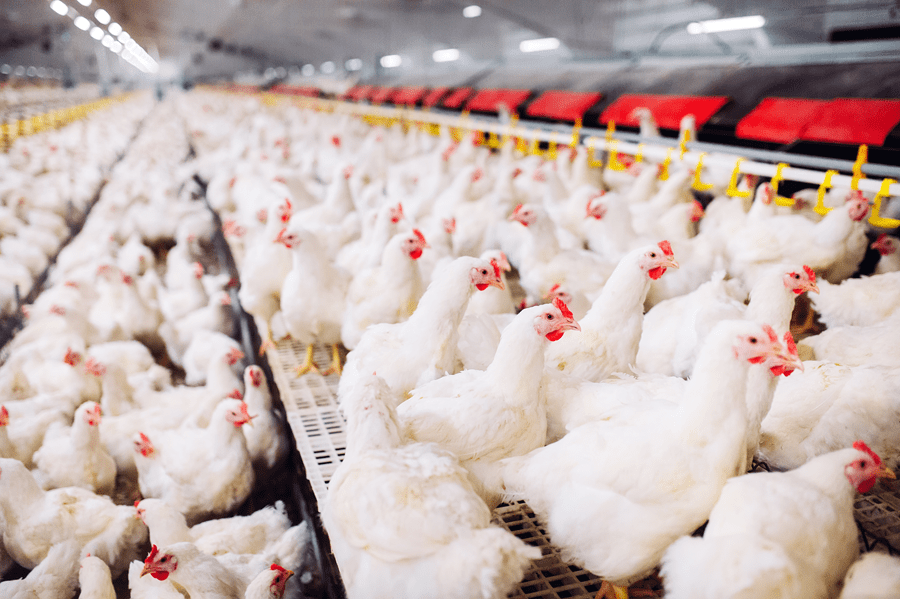
CHESTERFIELD, MO (June 11, 2026) — NOVUS and its research partners will showcase new findings in broiler resilience, copper sources, and low-energy diets at the 2026 Poultry Science Association (PSA) Annual Meeting, July 9-13 in Toronto, Canada. The three presentations highlight how intelligent nutrition can support broiler performance, intestinal health and nutrient utilization under commercial production challenges.
“These studies help expand our understanding of how nutrition can support bird health and productivity while helping producers and nutritionists navigate economic and operational challenges,” says Lindsay Parker, NOVUS poultry solutions senior manager for North America.
Supporting Broiler Resilience During Enterococcus cecorum Challenge
In partnership with North Carolina State University, researchers evaluated whether replacing inorganic trace minerals with lower levels of methionine hydroxy analogue bis-chelated trace minerals, supplied as MINTREX® Bis-Chelated Trace Minerals, could influence Enterococcus cecorum translocation and broiler health.
“E. cecorum translocation is a process wherein this opportunistic, Gram-positive bacterium crosses the intestinal epithelial barrier to enter the bloodstream, subsequently spreading to internal organs, joints, and bones, resulting in compromised immune function and reduction in overall bird performance,” says Parker.
The results show that birds fed a diet where inorganic trace minerals were replaced with lower inclusion levels of bis-chelated organic trace minerals saw reduced bacterial translocation along with performance support during the challenge. Researchers also saw indications of enhanced resilience to E. cecorum exposure in bis-chelate-fed birds.
Lisa Bielke, Ph.D., of North Carolina State University will share details of the trial in the presentation titled, Methionine Hydroxy Analogue Bis-Chelated Trace Minerals Reduce Enterococcus cecorum Translocation in Broilers, at 8:30-8:45 a.m. on July 11.
Transcriptomics Reveal Biological Differences Between Copper Sources
NOVUS partnered with Biofractal on three broiler studies involving 3,624 birds exposed to intestinal challenges. Researchers compared methionine hydroxy analogue bis-chelated copper, supplied as MINTREX® Cu Bis-Chelated Trace Mineral at 30 ppm, to tribasic copper chloride (TBCC) at 100-125 ppm, and low-copper control groups.
Using transcriptomic analysis, researchers identified important biological differences between copper sources. Findings indicate the bis-chelated copper source supported intestinal health, cellular energy production and amino acid metabolism more effectively than TBCC under challenge conditions.
“This study contributes to an already substantial amount of research regarding how highly bioavailable bis-chelated trace mineral sources can deliver comparable or enhanced biological responses at lower inclusion levels than traditional inorganic minerals,” says Parker. “As producers and nutritionists continue to evaluate feed costs, nutrient utilization, and sustainability goals, understanding a mineral’s mode of action and how it is utilized by the bird remains an important area of research.”
Maria Walsh, Ph.D., of Biofractal will present Transcriptomic Evidence of the Mechanism of Action of Bis-Chelated Copper in Broiler Chickens, at 11:00-11:15 a.m. on July 12.
NOVUS Xylanase Supports Feed Efficiency in Reduced-Energy Diets
This 42-day broiler study conducted in partnership with Agrivet Research & Advisory evaluated whether two xylanase enzymes, a xylanase from NOVUS and a wild-type xylanase, could offset performance losses associated with reducing dietary energy by 130 kcal/kg in corn-soybean meal diets.
Not surprisingly, researchers observed that reducing dietary energy negatively affected broiler performance. But birds fed the NOVUS xylanase saw fully restored feed efficiency and results that suggest benefits to intestinal health and nutrient absorption. Those birds also saw greater caloric utilization than the birds fed the wild-type xylanase under reduced-energy feeding conditions.
Hugo Romero, Ph.D., of NOVUS, will present Bio-optimized xylanase improves feed efficiency in broilers fed energy-reduced corn-soybean meal diets, at 8:15-8:30 a.m. on July 13.
PSA attendees can learn more about these presentations and connect with NOVUS representatives at the event in Toronto.
NOVUS is the intelligent nutrition company providing solutions for the global animal agriculture industry. Combining experienced people, insightful perspective and smarter solutions, NOVUS helps producers around the world achieve their goals for animal health, performance and sustainability.