


From Uncertainty to Confidence: Why NIAS Matters for Feed Ingredient Quality
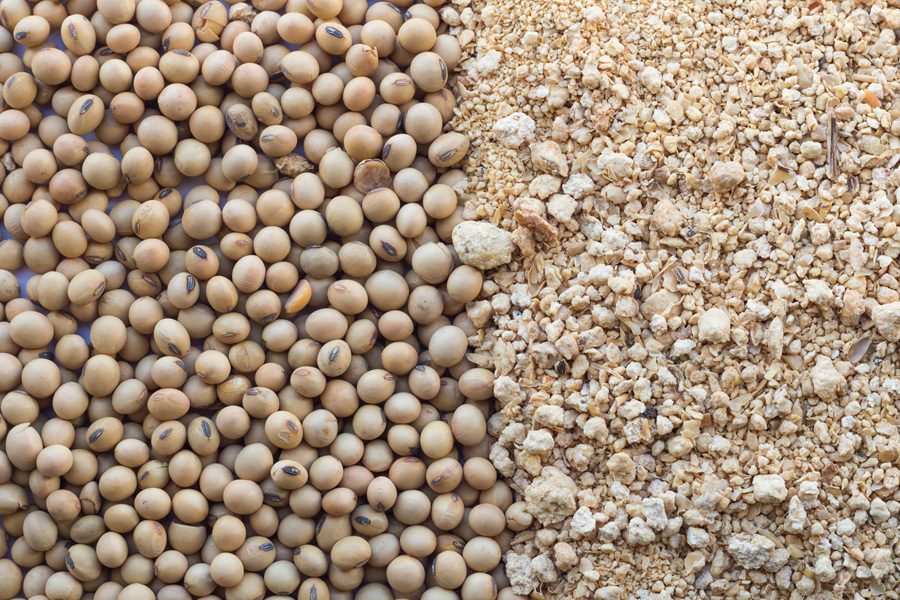
Variability in soybean meal quality presents an ongoing challenge for swine and poultry producers. Even small differences in anti-nutritional factors like trypsin inhibitor can influence amino acid digestibility, feed efficiency, and overall animal performance. The NOVUS® Ingredient Assessment Service (NIAS) was created to address this challenge by providing faster, more accessible insights into ingredient quality to support more informed decision-making.
Soybean meal is a foundational ingredient in animal nutrition, yet its quality is not uniform. NOVUS has spent over a decade studying soybean meal sourced throughout the world. The 3,000 samples in our database confirm a simple truth: quality varies between batches, locations, and years. One of the most critical variables in soybean meal is trypsin inhibitor (TI), an anti-nutritional factor that can reduce protein digestibility when present at elevated levels. Research indicates that TI levels greater than 1 mg per gram of feed can negatively affect amino acid utilization and animal performance. Traditional laboratory methods for measuring TI, such as wet chemistry, provide reliable data but can be time-intensive, costly, and limited in accessibility. This creates a gap between when a feed ingredient is received and when actionable insights are available. NIAS was developed to close that gap by delivering rapid, scalable analysis that enables producers, nutritionists, and feed mills to respond more quickly to ingredient variability.
The service provides soybean meal quality analysis using near-infrared spectroscopy (NIR). Rather than measuring TI through time-consuming procedures, NIAS uses a predictive model built from extensive wet chemistry data to estimate TI levels quickly and efficiently. Along with TI values, the service provides insight into expected changes in amino acid digestibility associated with those levels, as well as benchmarking data that compares results across regions or globally. This combination of analytical results and nutritional interpretation helps NOVUS customers understand both the composition of their ingredients and the potential impact on animal performance.
The process is designed to keep up with commercial operations. Two models were created: one for customers working with partner laboratories, the other for customers using their own lab. For those working with a customer lab, the customer submits a soybean meal sample, typically 100 grams, to a validated lab in their region. The sample is analyzed using a robust NIR model developed and continuously refined by the NOVUS Analytical Services team using global datasets. Results are typically delivered within three business days through a cloud-based platform, allowing users to access data quickly and consistently. Because the system operates through the cloud, updates to the model are automatically applied, ensuring that users benefit from ongoing improvements without additional effort.
The process is similar with a customer-owned lab: the equipment is calibrated to NOVUS specifications, and the results are immediately available. In both cases, NOVUS Technical Services teamsevaluate the results against those of the NOVUS Global Trypsin Inhibitor Database and share the findings and practical suggestions for feed formulation and ingredient sourcing with the customer.
The service is available to NOVUS customers (integrators and feed manufacturers) and is particularly valuable for operations that manage large volumes of feed ingredients and require consistent quality control across suppliers and production sites. By providing access to advanced analytical capabilities without the need for in-house laboratory infrastructure, NIAS enables NOVUS customers to evaluate ingredient quality with confidence.
For the swine and poultry industries, where feed represents a significant portion of production costs, managing variability in ingredient quality is essential. NIAS supports this effort by allowing producers to assess soybean meal before it is used, adjust formulations based on digestibility expectations, and monitor supplier consistency over time. The service also focuses on directly estimating TI activity rather than relying on indirect indicators such as urease activity, which may not consistently reflect actual TI levels. This direct approach provides a clearer understanding of anti-nutritional risk and supports more precise nutritional strategies.
By combining speed, accessibility, and scientific validation, NIAS enables a more proactive approach to feed quality management. Click here to learn how you can use the service for your operation.
Intelligent Nutrition for Your Business
More science. More insight. More inspiration. More ways for you to feed the world.