


Not All Organic Trace Minerals Are Created Equally
Modern production animals are expected to reach increasingly demanding production objectives while maintaining structural integrity, product quality and consistency. For nutritionists, meeting those expectations requires more than supplying the right amount of each nutrient. It also requires considering how effectively those nutrients can be utilized by the animal.
Trace minerals such as zinc (Zn), copper (Cu) and manganese (Mn) support numerous biological functions, including bone formation, connective tissue development, skin and gut integrity, antioxidant defence, immune function and reproduction. Yet the value of trace mineral supplementation depends not only on how much mineral enters the feed, but also on how much it is available for absorption.
This distinction is particularly important when evaluating organic trace minerals (OTMs). Although products may share the same broad classification, differences in molecular structure, bonding and stability mean they may behave differently during digestion.
Moving beyond mineral inclusion
Trace mineral programs are often compared using inclusion rates, mineral concentration and cost per ton of feed. These measures are useful, but they provide only part of the picture.
Before a mineral can contribute to biological functions, it must travel through a complex gastrointestinal environment. Changes in pH and interactions with dietary components can influence whether the mineral remains available as it approaches the site of absorption.
This means nutritionists may switch from asking, “How much mineral is in the feed?” to “How much mineral remains available to the animal?”
Understanding mineral antagonism
During digestion, trace minerals may encounter phytate, fiber components and other minerals. Interactions among these compounds can affect mineral availability before absorption occurs. When minerals dissociate into charged ions, they can become more susceptible to these interactions. As a result, simply increasing mineral inclusion does not necessarily address the underlying challenge.
The chemical form in which the mineral is supplied therefore deserves consideration alongside its concentration in the diet.
Organic does not mean identical
Organic trace mineral is a category, not a description of one specific molecular structure.
Different OTM sources can vary in ligand type, ligand-to-mineral ratio, molecular structure, bonding characteristics, electrical charge and stability in the upper digestive tract. These differences can influence how the mineral behaves during digestion.
This means two mineral sources can both be described as organic while having substantially different chemical characteristics.
For nutritionists comparing sources, classification alone provides limited information. Understanding the structure behind that classification offers a more complete basis for evaluation.
Why chelation matters
Chelation is one approach used to help protect trace minerals as they travel through the digestive tract.
However, not all organic mineral sources have the same structure. Some are chelates, while others may be complexes, proteinates or other forms of association. Even among chelates, structural differences exist.
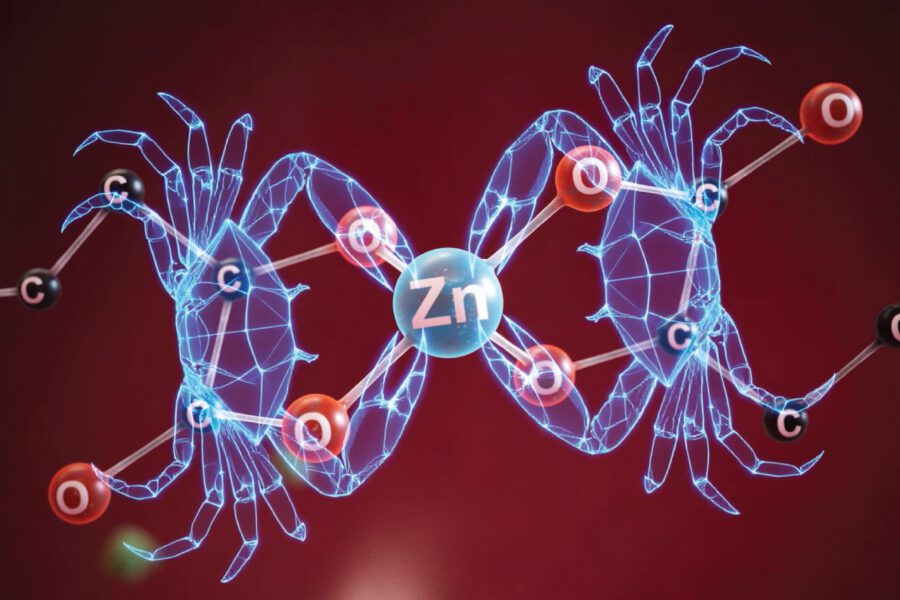
Bis-chelated trace minerals have a defined structure in which a mineral ion is associated with two ligands, forming two chelate rings. An important characteristic of this structure is its neutral molecular charge. This distinction matters because charged mineral ions can be more susceptible to unwanted interactions with dietary antagonists. A neutral molecular structure is less susceptible to these interactions, helping maintain mineral availability during its journey through the gastrointestinal tract.
Looking at the molecule, not just the category
The differences among OTMs mean nutritionists can benefit from looking deeper than the product category when evaluating mineral sources.
Questions worth considering include the type of ligand, ligand-to-mineral ratio, molecular charge, bonding characteristics and stability of the mineral source during digestion. The scientific evidence supporting a particular mineral source is equally important.
Together, these characteristics provide a more meaningful picture of how a mineral source is likely to behave than the term “organic trace mineral” alone.
An intelligent approach to trace mineral nutrition
As animal genetics and production systems continue to evolve, mineral nutrition must keep pace.
The opportunity is not necessarily to supply more minerals. It is to understand how mineral chemistry influences availability to the animal.
For nutritionists, that means moving from a category-based view of trace minerals toward a structure-based approach. Organic trace minerals are not interchangeable simply because they share the same classification. Molecular structure, charge and stability can distinguish how different sources behave during digestion.
The next time an OTM program is evaluated, the most important questions should go beyond how much mineral is included in the diet. What matters is the structure carrying that mineral through the digestive tract and how effectively the mineral remains available for absorption.




Intelligent Nutrition for Your Business
More science. More insight. More inspiration. More ways for you to feed the world.