


Milk Components and Dairy Value: An Intelligent Nutrition Perspective
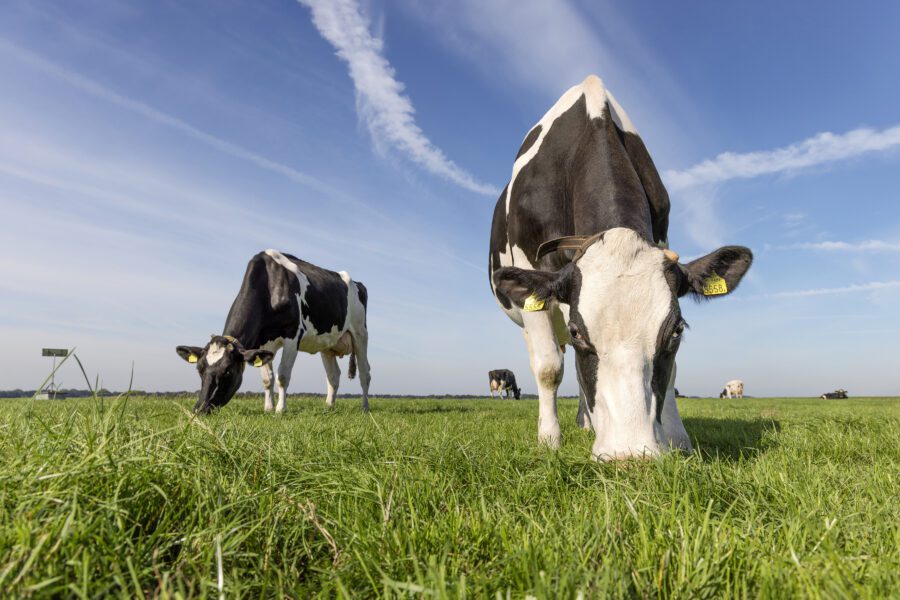
For pasture-based dairy producers, making good use of forage is fundamental to the business. But as pasture becomes a larger part of the diet, changes in the nutrient profile of the pasture can have significant impacts on the overall ration.
One of the first places that a change in ration may show up is in the vat. When milk components contribute to farm income, maintaining composition can be commercially important as well as nutritionally relevant.
When the Ration Changes, Milk Components Can Follow
A commercial field evaluation in a 300-cow pasture-based herd in New Zealand looked at milk fat stability while pasture contribution to the diet was increasing. *
The ration was relatively low in starch, ranging from 8.1% to 11.4% of dry matter, while neutral detergent fiber (NDF) remained close to 37% of dry matter.
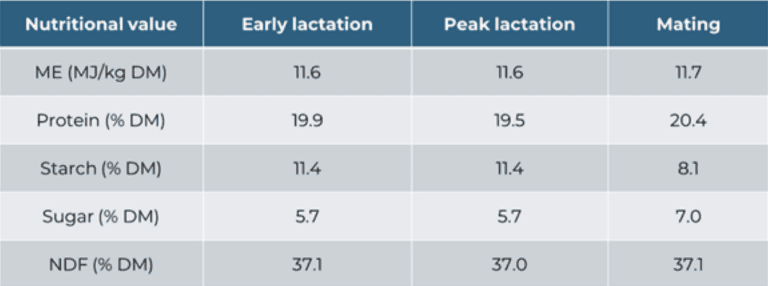
ME = Metabolizable energy; DM = Dry matter; NDF = Neutral detergent fibre.
But the diet was changing in other important ways. During the first 30 days of the evaluation, pasture allocation increased from 4.5 kg (9.9 lb) to 12 kg (26.5 lb) dry matter per cow. As pasture intake increased, dietary linoleic acid also increased. At the same time, physically effective NDF (peNDF) declined as the increasing pasture allocation replaced preserved forages. The field report associated this shift with reduced rumen buffering capacity and faster ruminal passage.
For nutritionists and consultants, that distinction matters. Total NDF can remain relatively constant while the physical characteristics of the diet and its fatty acid profile continue to change.
What the Field Evaluation Observed
In the week before the feeding strategy was introduced, bulk-tank milk fat declined from 5.9% to 5.4%. A similar decline occurred during the comparable period in the previous year, from 6.1% to 5.6%.
MFP® Feed Supplement was then included in the basal ration at 30 g per cow per day. Following inclusion, milk fat remained at approximately 5.5% for more than 30 days. During the comparable period in the previous year, milk fat continued to decline to below 5%. Later in the evaluation, milk fat was around 5.4%, approximately 0.4 percentage points higher than the corresponding 2024 period.
Because this was a commercial field evaluation rather than a controlled research study, the year-to-year comparison does not establish that MFP® Feed Supplement caused the difference observed. The field observation was that the decline stopped while the dietary challenge was continuing to develop.
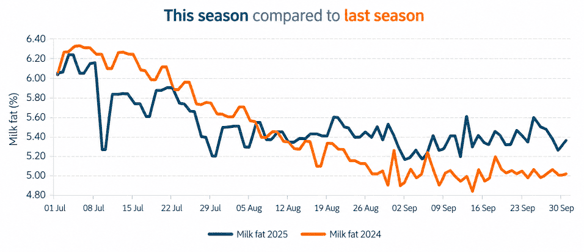 Figure 1. Bulk-tank milk fat (%) during the 2025 field evaluation compared with the same period in 2024.
MFP® Feed Supplement was included beginning July 28, 2025.
The Value of Maintaining Milk Components
Milk volume in the field evaluation remained at 23.9 L per cow per day. In the financial model included in the report, milk fat moved from 5.2% to 5.6% and protein from 4.1% to 4.2%. The model used NZ$10/kg for milk fat and NZ$10/kg for milk protein and calculated a change in income of NZ$1.23 per cow per day. Under those specific assumptions, the calculated return on investment was greater than 5:1.
Understanding Milk Components During Dietary Change
When milk fat begins to move, it is worth looking beyond fibre and ruminal acidosis. Pasture maturity , peNDF, dietary fatty acids, and the overall feeding program can help build a clearer picture of how the diet is contributing to or reducing milk components.
This was a commercial field evaluation rather than a controlled research trial, and year-to-year comparisons have limitations. An on-off-on evaluation was proposed to assess whether MFP® Feed Supplement was responsible for the observed milk fat stability, but it was not carried out because of the financial implications of removing MFP® Feed Supplement
Within those limitations, inclusion of MFP® Feed Supplement coincided with greater milk component stability during a period when milk fat had been declining.
For pasture-based dairy businesses, it is important to understand how changes in pasture can influence milk components and directly impact the value of the milk being produced. To discuss where MFP® Feed Supplement may fit within a pasture-based feeding program, contact your NOVUS representative or visit novusint.com/dairy.
Footnote – These calculations are specific to the herd, evaluation period and pricing assumptions used in the report. They should not be viewed as a prediction of financial outcomes for other herds, markets or milk-payment systems. Where milk components are included in payment calculations, changes in milk composition can affect milk value even when milk volume does not change.
*NOVUS commercial field evaluation, pasture-based dairy herd, New Zealand, 2025, unpublished data. Feeding-level note: The 30 g per cow per day feeding level described above reflects this specific field evaluation and should not be interpreted as a feeding recommendation for other herds or markets. Confirm local product information and regulatory requirements before use. Products not available in all countries. Product availability and permissible claims may vary by market. ®MFP is a trademark of Novus International, Inc. and is registered in the United States and other countries.



Intelligent Nutrition for Your Business
More science. More insight. More inspiration. More ways for you to feed the world.