


1. Enrollment
Customers begin by contacting their NOVUS sales or technical services representative to enroll in the service and receive information about submitting samples to a partner laboratory within their region.
Feed ingredient quality can vary widely, even when they appear consistent. For poultry and swine producers, that variability creates uncertainty in formulation decisions, performance expectations, and cost control. The NOVUS® Ingredient Assessment Service (NIAS) provides a practical, scientific way to better understand soybean meal quality before it enters the ration, so customers can make informed decisions that support both animal performance and financial goals.
The NOVUS® Ingredient Assessment Service (NIAS) is a Near-Infrared Reflectance Spectroscopy (NIR)-based evaluation designed to assess the quality of soybean meal by providing an estimate of trypsin inhibitor (TI) levels. Trypsin inhibitors are naturally occurring anti-nutritional factors that can reduce protein utilization. By providing a timely estimate of TI, the service gives customers actionable insight into ingredient quality that is not available through traditional proxy tests such as urease activity.
This service is supported by a robust NIR model developed from global soybean samples NOVUS has been collecting and analyzing for over a decade. The model is continuously reviewed and updated to reflect new data and regional variation, ensuring consistency and relevance across locations.

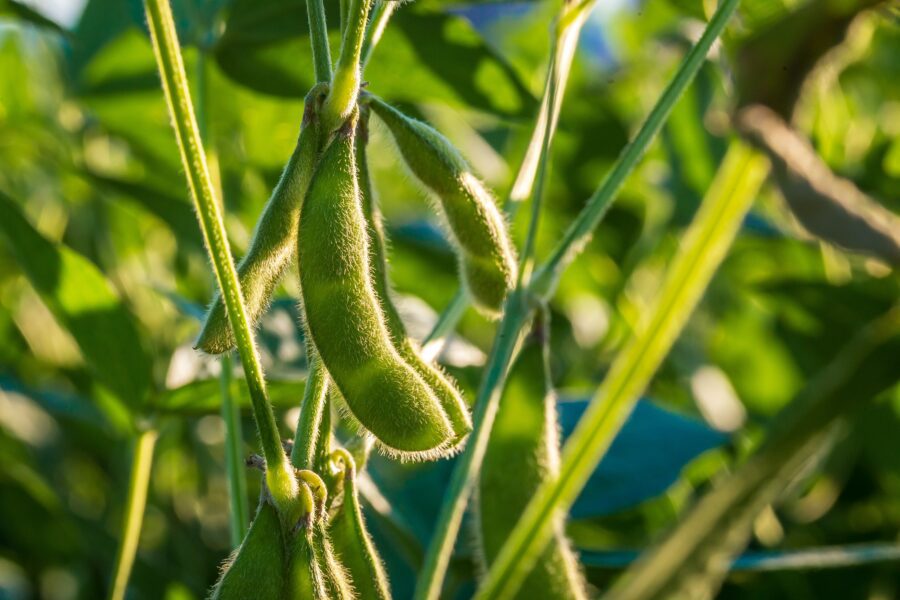
Soybean meal is a major cost driver in poultry and swine diets, and small differences in quality can have meaningful impacts. Elevated trypsin inhibitor levels can influence amino acid digestibility, leading to inefficiencies in nutrient utilization.
NIAS helps customers:
With clearer insight into ingredient quality, nutritionists and production teams can make more confident decisions that allow for informed formulation decisions aligned with production objectives and financial planning.
Each analysis delivers practical, operation-relevant outputs, including the predicted trypsin inhibitor (TI) levels for the submitted soybean sample.
The service offers two models: partner labs and customer-owned labs. With partner labs, the results are typically available within 72-hours from the time the sample arrives in the lab. The results are immediate for customer-owned labs. In both instances, the access to this information allows customers to quickly address TI levels.
Accurate ingredient information can mean better formulation decisions, which in turn provides consistent nutrient delivery to birds and pigs. By understanding trypsin inhibitor levels and their potential impact on digestibility, customers can better align diets with animal requirements at each stage of production.
Over time, this approach aids in animals reaching their genetic potential while helping producers manage feed efficiency and variability and protect margins. The service also contributes to longer-term procurement strategies by highlighting ingredient trends, supporting more resilient and cost-effective operations.

Customers begin by contacting their NOVUS sales or technical services representative to enroll in the service and receive information about submitting samples to a partner laboratory within their region.
A minimum of 100g of soybean meal is recommended. Samples should be placed in a clean, sealable package to prevent contamination or loss during shipping.
Samples are analyzed using validated NIR technology at approved partner laboratories operating under NOVUS oversight. All labs use the same models and software to ensure consistency.
NOVUS technical experts review the results, deliver them to the customer through a cloud-based system and then help customers understand how the data applies to their specific operation.
Customers begin by contacting their NOVUS sales or technical services representative to enroll in the service and receive information about calibrating their FOSS or Bruker instrument according to the NOVUS NIR model.
A minimum of 100g of soybean meal is recommended.
Samples are analyzed using validated NIR technology calibrated to NOVUS models.
Results are available immediately. NOVUS technical experts connect with customers to explain how the data applies to their specific operation.
NOVUS has been collecting and analyzing global soybean data related to trypsin inhibitor levels for more than a decade. This growing database strengthens the predictive power of the NIR models and provides customers with insights grounded in real-world variation across regions and supply chains.
The NOVUS® Ingredient Assessment Service goes beyond delivering a number. It combines validated analytics, cloud-based accessibility, and technical expertise to help customers make confident decisions about one of the most frequently used ingredients.
To learn more or to enroll in the service, contact your local NOVUS representative.

Working together, we can elevate your ability to meet today’s demands and deliver high-quality protein to everyone. Let’s get growing.