


Are You Getting More Than Viral Management From Your Feed Investment?
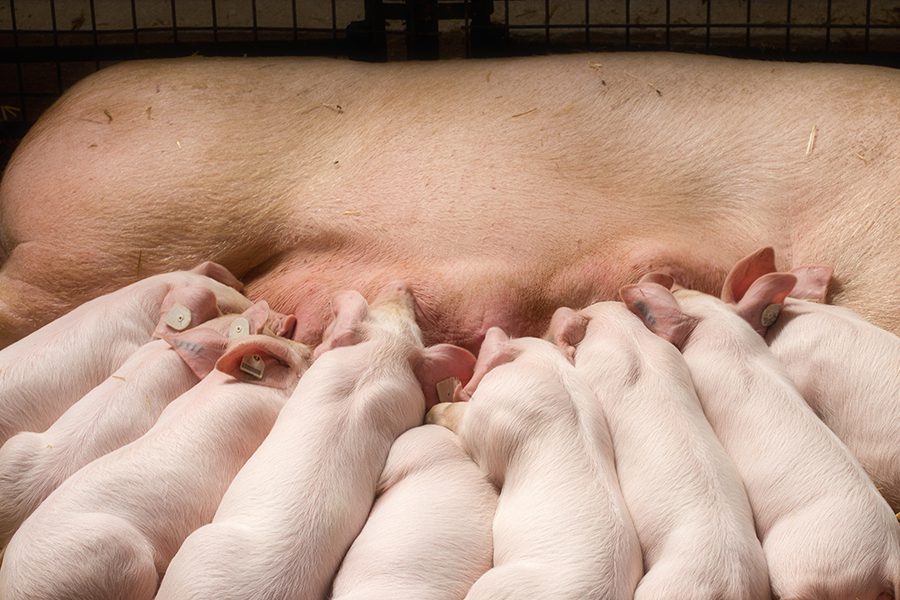
Many producers already invest in feed additives as part of their viral management and feed biosecurity strategies.
Whether the goal is supporting feed biosecurity practices or incorporating an additional feed management strategy, these products have become a routine part of many production systems.
The challenge is that viral management products are often evaluated using a single metric: cost.
- What’s the cheapest option?
- What’s the cost per ton?
- How much am I spending per sow?
Those questions matter. But they do not tell the whole story.
A better question is: What am I getting back?
If you’re already making that investment, shouldn’t it deliver value every day, not just when disease pressure is high?
For many producers, the answer could extend beyond feed biosecurity to everyday nutritional value, sow productivity and pig performance.
Looking Beyond Cost
When it comes to viral management, producers often fall into one of two camps.
Some view feed as a relatively minor source of disease risk but want some level of protection in place. Others see feed biosecurity as an important part of their herd health strategy.
While they may view risk differently, both groups often make purchasing decisions based primarily on price.
The challenge is that price alone rarely reflects value.
If two different products are incorporated into feed biosecurity programs, but one also contributes to sow productivity and piglet performance, are they really equivalent?
Why Feed Biosecurity Matters
Managing disease risk remains a priority for swine producers.
Porcine reproductive and respiratory syndrome virus (PRRSv) remains one of the most economically significant diseases affecting the swine industry, with annual losses estimated at more than $1.2 billion in the United States.1 Research has shown that feed can serve as a potential route of pathogen transmission under certain conditions, reinforcing the importance of feed biosecurity programs.2
In one study, researchers evaluated ACTIVATE® DA Nutritional Feed Acid and observed reduced PRRSv survivability in contaminated feed. Under the conditions of that study, researchers also reported differences in transmission outcomes among pigs consuming contaminated feed.3
For many producers, findings like these may support consideration of feed biosecurity investments.
But what if the same investment could also deliver value every day it is fed by contributing to sow and piglet performance?
What Else Is Your Investment Doing?
Feed biosecurity programs can provide value beyond feed biosecurity objectives.
Research evaluating ACTIVATE® DA Nutritional Feed Acid suggests it may provide additional value beyond feed biosecurity objectives. The formulation combines organic acids with 30% HMTBa, a highly available methionine source. Research suggests this formulation may support nutritional objectives evaluated in sow studies, such as sow reproductive performance and progeny gut integrity.3,4
In a commercial study conducted in Brazil, 300 mixed-parity sows received an organic acid blend containing HMTBa from mid-gestation through lactation. Researchers observed significantly lower blood urea nitrogen concentrations during late gestation in supplemented sows, which researchers interpreted as being consistent with more efficient nitrogen utilization during a period of high nutrient demand.4 Researchers also observed numerical differences in wean-to-estrus interval and subsequent farrowing rate.4
Those observations are important because they represent value that exists whether a disease challenge occurs or not. Producers may experience benefits from the nutritional contribution of the product even during periods of lower disease pressure.
The Value May Show Up in the Next Generation
Perhaps the most interesting observation from the study was that the benefits extended beyond the sow.
Offspring from supplemented sows demonstrated approximately 1 kilogram (2.2 lb) greater body weight at 45 days post-weaning and a 7-point lower feed conversion ratio during the nursery phase compared with offspring from control sows.4 Researchers associated these observations with shifts in the fecal microbiome, including markers related to gut barrier function and immune regulation.
Researchers also observed lower concentrations of select cytokines, findings that may be consistent with altered immune regulation, suggesting maternal nutrition during supplementation with ACTIVATE® DA Nutritional Feed Acid may influence offspring responses beyond the farrowing house.5 These observations may help explain the greater post-weaning gain and lower feed conversion ratio observed in the study.
For producers, that raises an important question:
If you’re already investing in viral management, shouldn’t that investment contribute to pig performance too?
Shifting the Conversation From Cost to Return
Viral management products are often viewed as insurance.
Something you buy in the hope that you never need it.
Feed biosecurity programs can do more than support risk management. They contribute value throughout the production system.
- More efficient nutrient utilization
- Favorable sow productivity indicators
- Heavier pigs after weaning
- Lower feed conversion ratio
When multiplied across thousands of pigs, those gains can have a meaningful impact on profitability.
That is why viral management products should not be evaluated solely on what they cost.
They should also be evaluated on the value they create.
Because every pig counts.
And your feed investment should reflect that.
Don’t Just Manage Risk. Measure Value.
The most valuable feed programs provide value beyond feed biosecurity objectives. Research suggests they may contribute to sow productivity, pig performance and overall system efficiency.
See what else your feed investment can deliver. Learn how research evaluating ACTIVATE® DA Nutritional Feed Acid suggests value beyond feed biosecurity objectives.
Talk with your NOVUS representative to evaluate the potential return from your feed biosecurity investment.
References
- Holtkamp, D.J., et al. Economic impact of PRRS virus on U.S. swine producers.
- Dee, S., et al. Evidence demonstrating feed as a route of pathogen transmission in swine production systems.
- Dee, S., et al. Evaluation of ACTIVATE® DA Nutritional Feed Acid on PRRSv survivability and transmission outcomes in feed.
- S04OAH023006
- Acosta, J.A., Hintz, A., Lawrence, B.V., Hancock, D. An organic acid blend containing the Ca salt of 2-hydroxy-4-methylthiobutanoic acid fed mid-gestation through lactation may improve sow nutrient utilization and reduce offspring immune challenge. 2025 ASAS Annual Meeting, Abstract #113.


Intelligent Nutrition for Your Business
More science. More insight. More inspiration. More ways for you to feed the world.